
The Divine and the Diabolical: Jeannette Fang Piano Recital
September 28, 2026 I Jeannette Fang, pianist - Garth Newel Piano Quartet
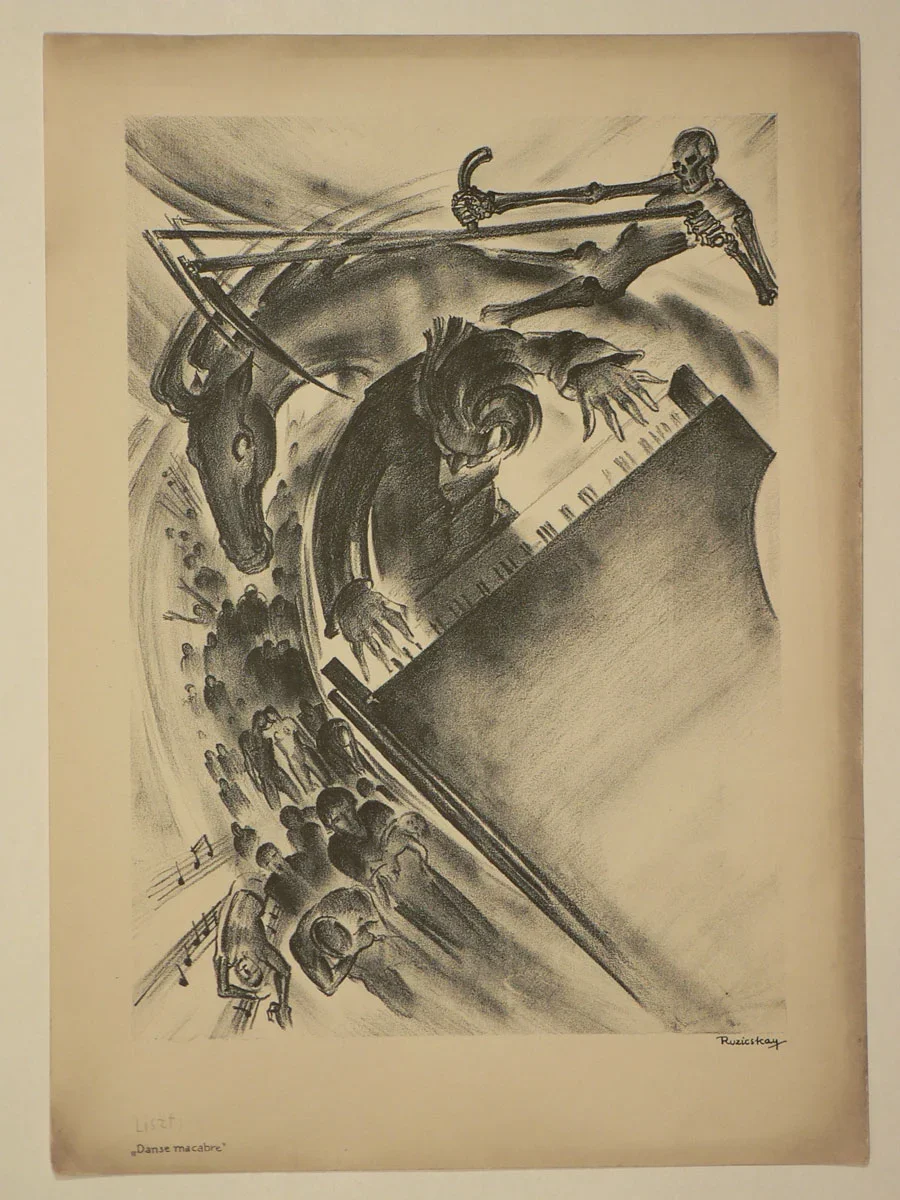
György Ruzicskay. “Danse macabre,” (1937). Aluminography on paper. 38 x 28 centimeters. Courtesy the Liszt Ferenc Memorial Museum and Research Centre.
There is nothing quite as satisfying as a Lisztian climax. Maybe because he was the OG piano rockstar, and maybe because his compositional ethos was spiritual, glorious, and epic, he definitely knew how to hit the spot. Surprisingly though, this is a satisfaction that I’ve not indulged in in recent years. But while most of my time is taken with performing chamber music, I do relish the few chances I get to explore the works that truly revel in all the piano is capable of. And one of these is Liszt’s great B minor sonata. Great does feel like too pedestrian of a word. Mammoth? Gargantuan?
Roll your eyes if you want. But to many pianists, this sonata represents the pinnacle of the Romantic piano repertoire. Not only was Liszt a maximalist compositionally, using all the tools of the piano to create as dramatic and majestic an effect the instrument could provide, he shoved past existing compositional boundaries by creating new genres of music that increased expressive and emotional power. The largest example of this was the symphonic poem, a single-movement orchestral work inspired by non-musical art (be it a poem, novel, painting, etc) without the limitations of the traditional four-movement structure.
In the same way, his only piano sonata was innovative in eschewing that existing multi-movement structure. Written like a massive tone poem, the sonata traverses four sections seamlessly without break, and is based on three motivic ideas that are introduced and then transformed ingeniously into highly varying expressive material. All of these techniques are Liszt’s innovations - never before had anyone composed a sonata as a single unbroken work, or used motivic cells as the basis for completely new characters.
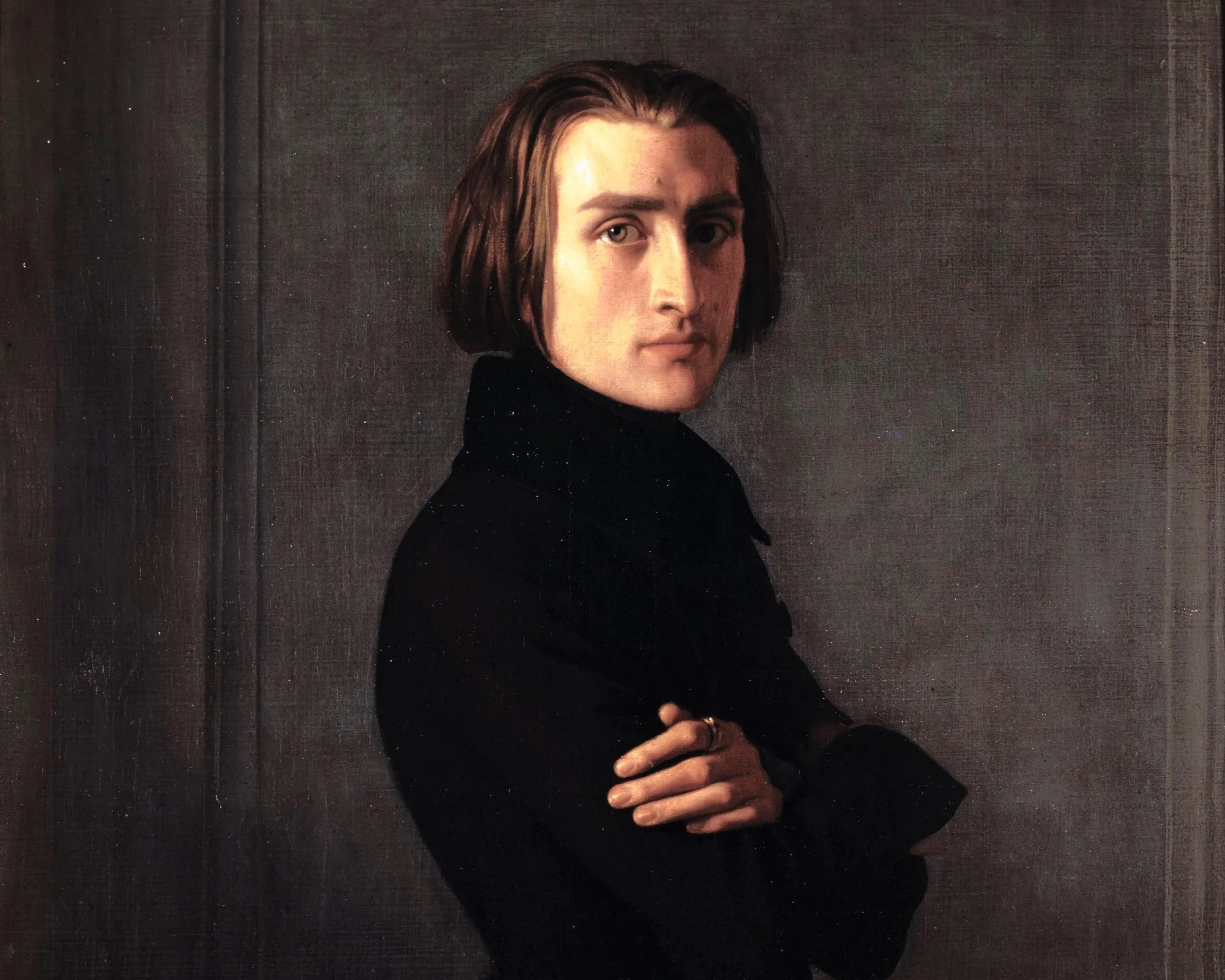
(image) Portrait of Franz Liszt, Henri Lehmann (1839)
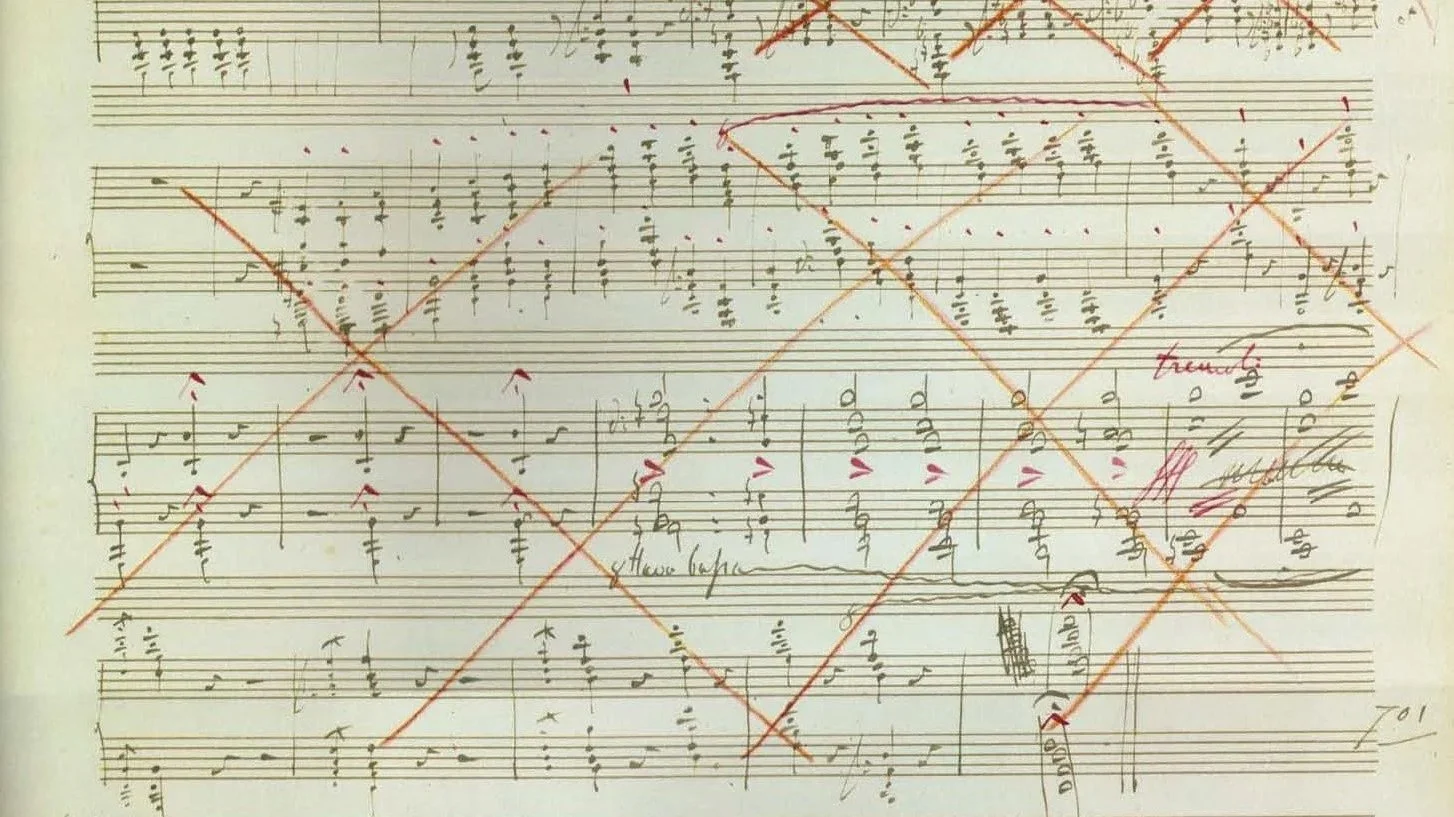
It’s a cyclical journey of such emotional range that it has prompted many to speculate that the sonata depicts the journey of Faust, or illustrates the story of the “divine” verses the “diabolical”. Because the work begins and ends from the ominous and silent depths, and because Liszt had such a fixation on the spiritual, one can see how people might have leapt to conclusion. From these depths, we travel with manic energy to a grand victory, which calms to reveal a middle section of yearning song that is interrupted by furious and implacable statements from below. Celestial peace then emerges with the purity of a simple chorale, the heart at the center of the work that becomes more impassioned and full. A frenzied fugue follows that truly explodes with all the pianistic fireworks one could want. But contrary to what you might expect, what concludes the work is that balm of the chorale.
(image) Revisions in the original manuscript of Liszt’s piano sonata, where he had crossed out the original loud ending.
Liszt himself eschewed prescribing a descriptive or narrative title, intentionally proclaiming the work as a grand sonata instead of attaching it to any defined story. In this, he made the work more personal, allowing us all to let the music speak to our own journey, often undefined and hard to put into words.
That is the power of music. Expression at its essence, without the translation of words. I’ve always found it difficult to put into words how music can move and transfix, because it always seems a step removed from the immediacy of feeling. It’s the way we are moved by what we can’t explain.

Sivas, Turkey
I wanted to pair the sonata with Fazil Say’s Black Earth, a work’s whose heart lays in the depiction of a something similarly inexplicable, the color of a homeland and what those feelings evoke.
Turkish pianist and composer Fazil Say based his work off a popular song Kara Toprak, written by the great Turkish balladeer Asik Veysel. The “black earth” is the color of Veysel’s native landscape of Sivas, and what is expressed is loneliness and loss as all that remains in the natural land, awesome and foundational despite everything that’s happened on it. Fazil’s compositional style embraces the improvisational freedom of folk music and jazz, while rooted in a romantic expressivity that, if you think about it, came from the innovations of Franz Liszt.
For sheer joy, I’ve put in Karen Tanaka’s Techno Etudes II, three works that I was thrilled to discover years ago for what it satisfies in me as a performer. Not only are they pieces that embrace the freedom of other genres like bebop and dubstep, they allow the pianist to feel like a rockstar.
You can hear these works on October 23rd and 25th. Click on the links below for more information and to reserve your spot: