
Bach’s Cello Suites: A Timeless and Personal Journey
September 19, 2026 I Isaac Melamed, cellist, Garth Newel Piano Quartet
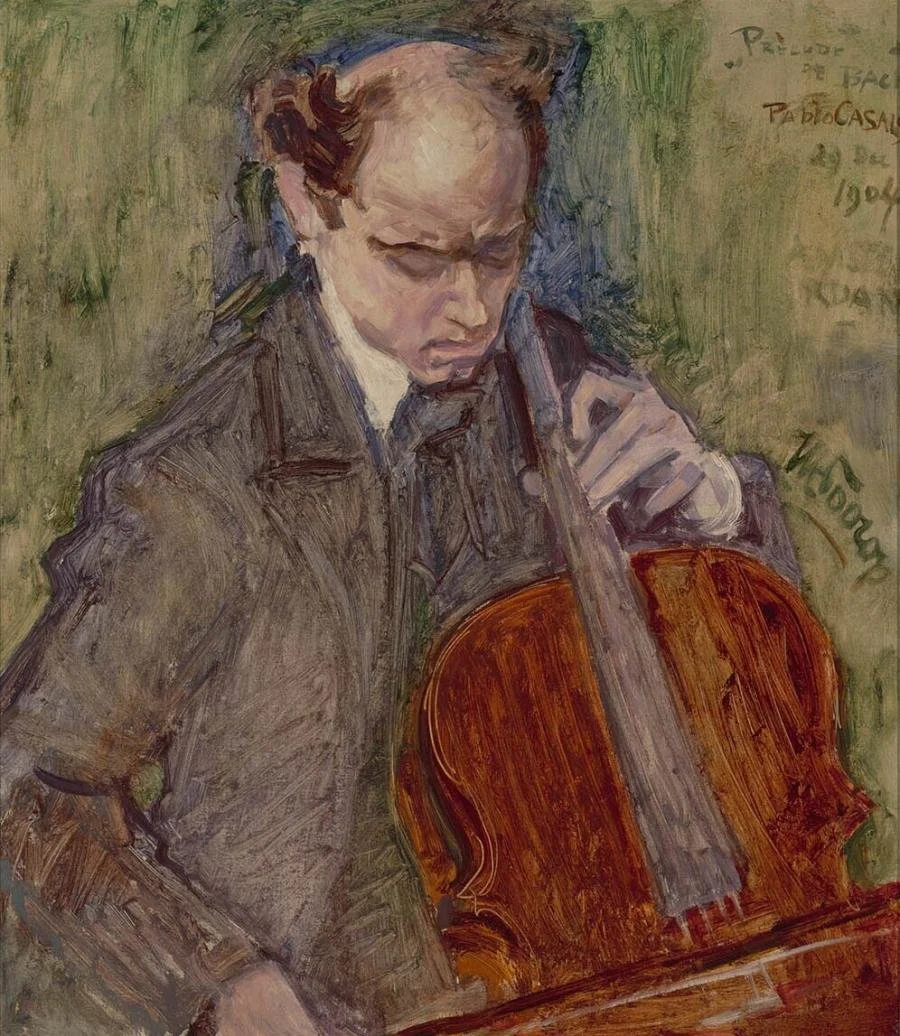
Pablo Casals playing cello (Museum Boijmans Van Beuningen)
Few works in the classical repertoire are as intimate and expansive as Johann Sebastian Bach’s six suites for solo cello. They were probably composed around 1717–1723, during Bach’s period in Köthen, when he was producing a great deal of instrumental music, and they take the listener on a harmonic and melodic journey across a vast spectrum of emotions and sound worlds. There is the radiant simplicity of the First Suite, the darker introspection of the Second, the expansive energy of the Third, the distinctive colors and harmonic worlds of the Fourth, the haunting gravity of the Fifth, and the triumphant joy of the Sixth. Each suite is structured with a Prelude followed by five dance movements, yet within that framework there is tremendous freedom: rhythms breathe, harmonies can surprise, and a single melodic line can suggest an entire conversation. What makes these pieces so compelling is that they are both highly structured and deeply personal; they merge the technical with the spiritual like only Bach can.
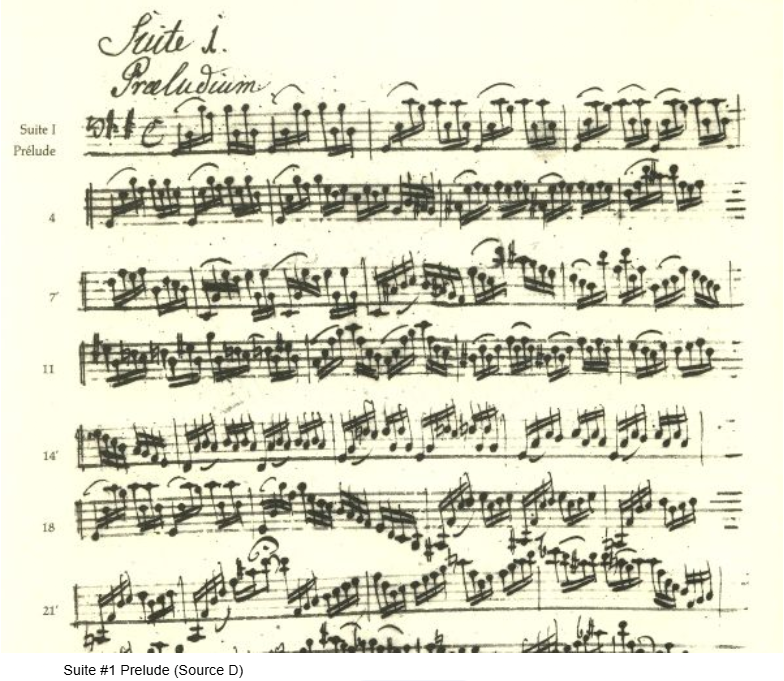
How does Bach capture all of this on a single string instrument? He uses what we call implied harmony to achieve the effect of fully fleshed out chords with just a single line of music. This is achieved with techniques such as arpeggios, broken chords, leaps to and from different voices, passing and neighboring tones, and special rhythmic emphasis on certain important notes. In this way, the performer is able to make a single instrument sound harmonically rich by encouraging the listener (much of the time subconsciously) to imagine the chords that are not literally present.
Bach’s cello suites were without a doubt the most inspirational and important pieces of my (ongoing!) formative years as a cellist. Learning each suite provides a sense of challenge and accomplishment, a feeling of immersing myself in something truly important and lasting. It also doesn't hurt that the cello suites are one of the very few works of classical music that have transcended the genre and made their way into popular culture. Many people who lack general interest in classical music have remarked to me how much they love the cello suites, and though they are usually only referring to the first and last phrases of the G Major prelude from Suite #1 (Thank you, Yo Yo Ma!), this still means a lot to me as a cellist. It’s hard to imagine that, for much of the 19th and early 20th centuries, these suites were not central to the standard repertoire. Their enormous revival is closely associated with the great cellist Pablo Casals, who discovered the suites as a teenager in a Barcelona music shop in 1890, and eventually helped establish them as essential concert works. Regardless of context, I’ve rarely come across a human being who has heard some or all of the cello suites and hasn’t been moved by them.
A few more seemingly trivial (but not!) reasons these suites have become deeply personal to me:
I am able to play them, as written, in full, without relying on anyone else. This may not seem like a big deal, but it is something that pianists are afforded the opportunity to do much more than string players are. Most of the great works for cello are either concertos (with orchestra), sonatas (with piano) or other types of chamber music (trios, quartets, etc). In terms of importance, there just aren’t any other solo works that even approach these for the cello.
I don’t need to bring music with me to practice! Of course I refer to the music when necessary, but these pieces are mostly an aural experience for me at this point, which means that I can pick up my cello, sit down anywhere, and start playing, without the need to lug around a stand and music (a cello is enough to carry around as it is!).
Surprisingly, unlike the violin sonatas and partitas, we don't possess a surviving autograph manuscript of the six cello suites in Bach's own hand. Much of what we cellists do today is therefore an act of reconstruction: we are interpreting copies, historical evidence, notation, and the physical possibilities of the cello. To me this is actually very liberating, as it means I can basically improvise my bowings and articulations (based on a combination style, performance practice, and how I am feeling in the moment), and I don’t feel locked into any ‘sacred’ written markings. As these are pieces that I believe are meant to sound improvised anyway, this really helps me to project that feeling when I play them.
When brainstorming concert ideas for the Fall season, which coincides with our Herter Hall renovation project, we thought it would be exciting to play solo works in the intimate setting of Garth Newel’s historic Manor House. Violist Fitz Gary (yes, these Suites work for viola as well!) and I decided to split the 6 suites between us, and we hope you will be able to join as we spread them among two October Weekends. Suites 1, 2 and 3 will be performed on October 16th and 18th; Suites 4, 5 and 6 will be on October 24th and 26th. Details can be found at www.garthnewel.org.